North Island Brown Kiwi
Apteryx mantelli
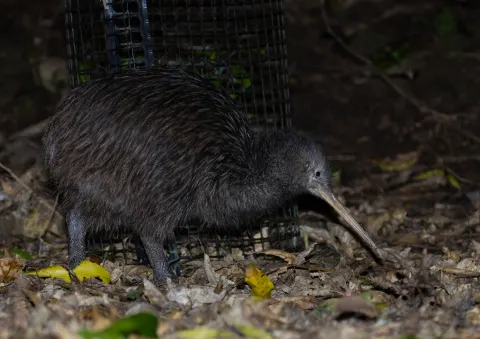
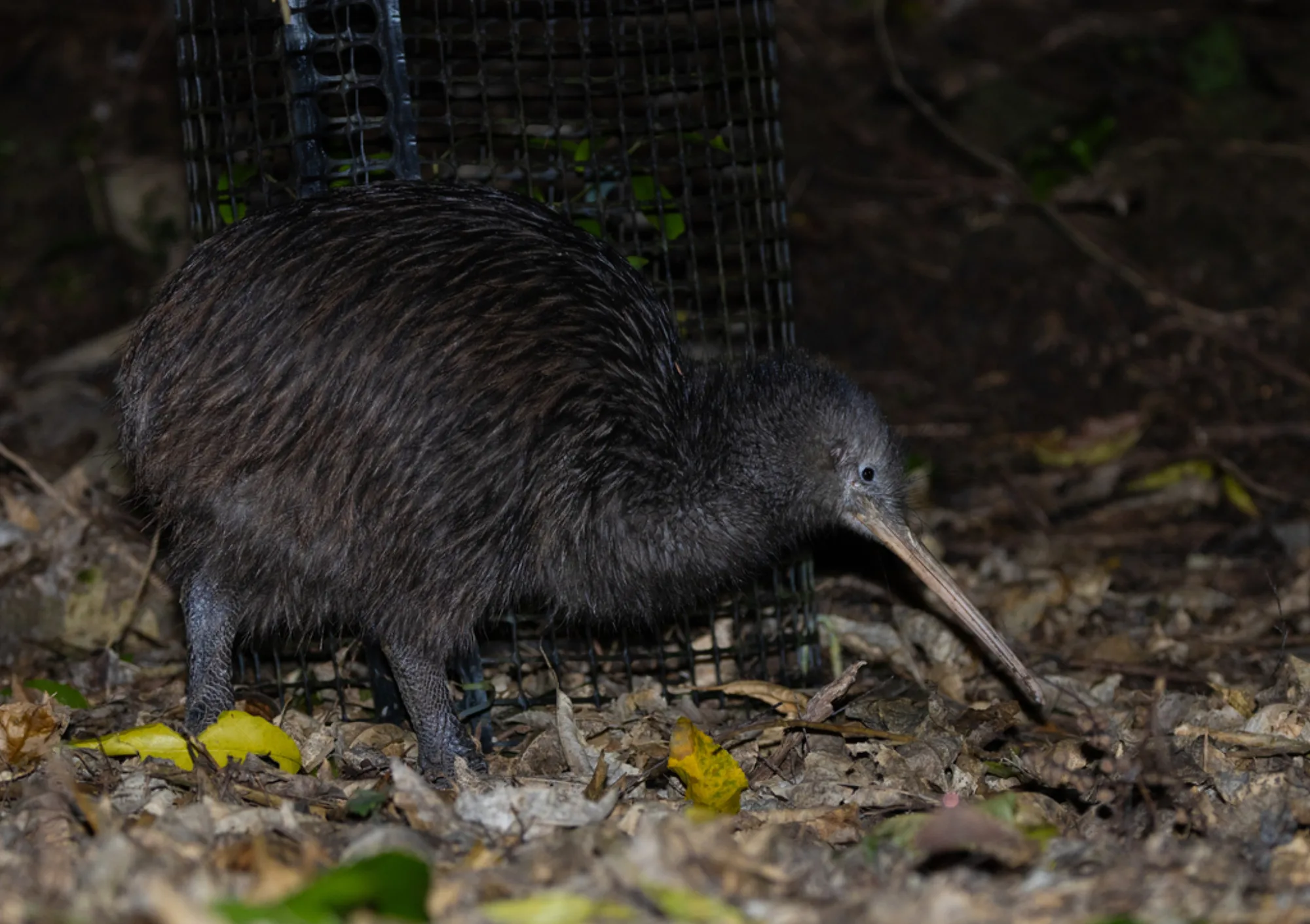
After dark, the North Island Brown Kiwi (Apteryx mantelli) forages on the forest floor. This large, flightless bird has brown, spiky, streaked feathers and a long, slightly down-curved bill. Females are larger than males. Its most familiar call is a whistle, heard from a bird on its own or from a pair calling together. Males tend to call more often and produce higher-pitched notes than females.
The kiwi is widespread across the northern two-thirds of New Zealand's North Island, with isolated populations also on nearby islands. It is most abundant in Northland, but occurs more sparsely in places including the Coromandel Peninsula, Bay of Plenty and Taranaki. It favours densely vegetated lowland and coastal native forest, although it also uses pine forests, overgrown pasture, dunes, scrub and regenerating forest. Food and shelter appear to be the main influences on where it lives.
Kiwi spend much of their time searching for food, tapping and probing the ground with their bills and using smell and touch to find prey. Spiders, worms and other invertebrates make up 85 to 95% of their diet, with plant material making up the rest. Pairs usually stay together long term and prepare a nest in their territory, often underground or in a rock crevice or hollow tree. The male incubates the eggs, and the chicks leave the nest within ten days and forage independently. Dogs, cats, stoats and ferrets prey on kiwi, while deforestation and habitat clearance are also threats. In places with few or no predators, populations have increased.
Written from the English Wikipedia article North Island brown kiwi (CC BY-SA 4.0).
- Records
- 2,220
- Countries
- 1
- Atlas places
- 1
These are open occurrence records, so they show where people looked for and recorded the North Island Brown Kiwi as much as where it lives. Cells are up to 25 km across, and every location is generalised to its cell.
Generalised encounter areas, not exact locations. Each shape is a grid cell coloured by how likely the species is there.
- Very likelyNew Zealand25 km zone · high confidence · 2220 records · updated 80 days ago
Conservation status not assessed here yet, so every location is generalised to its grid cell.