Eastern Whip-poor-will
Antrostomus vociferus
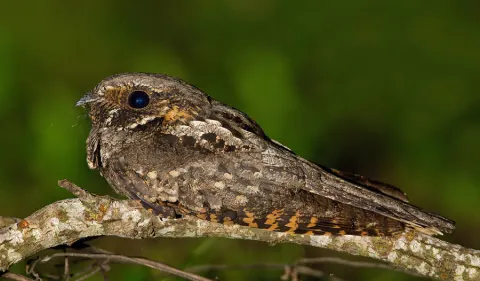
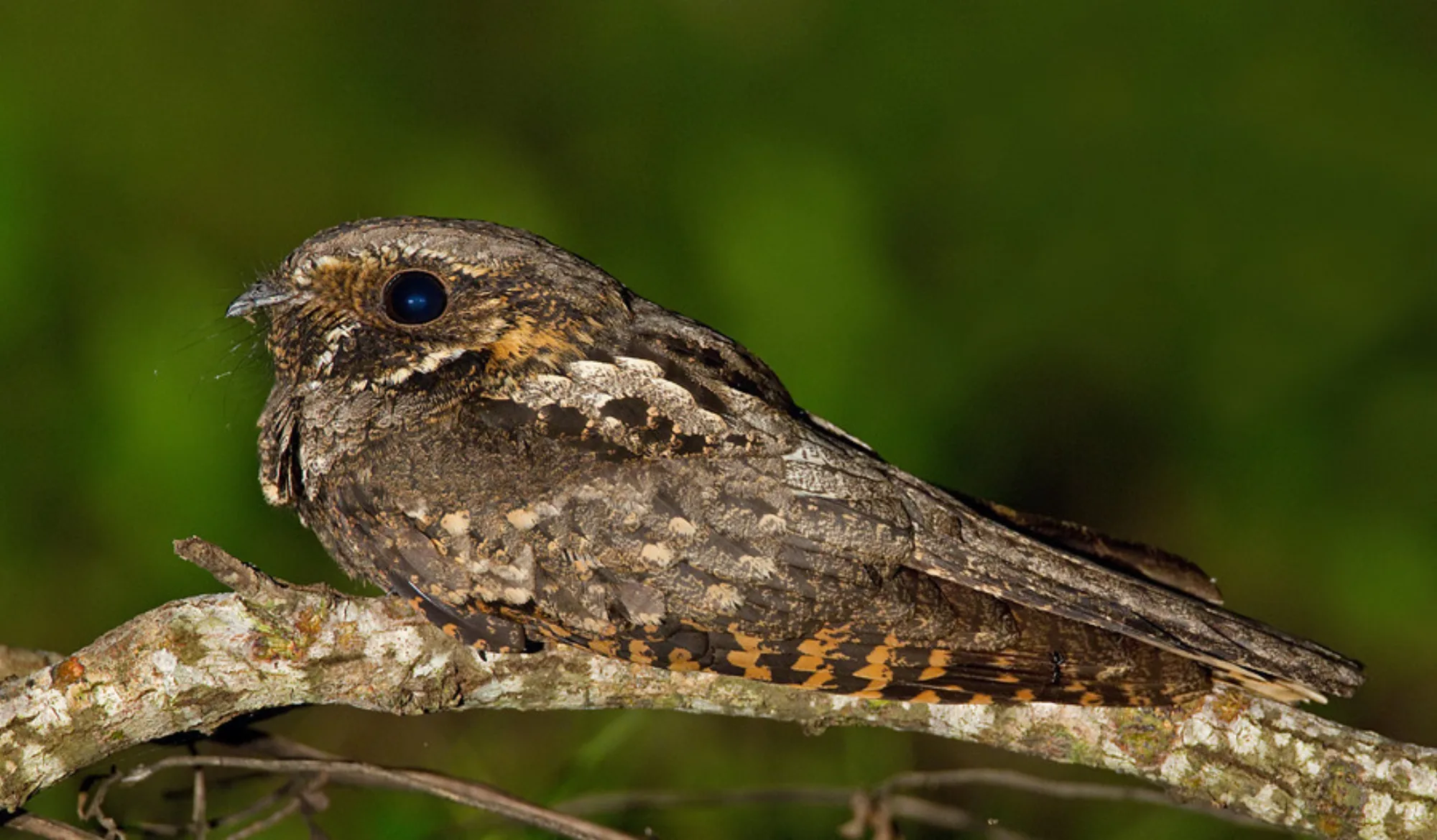
More often heard than seen, the Eastern Whip-poor-will is a North American nightjar whose mottled colouring helps it blend into its surroundings. It takes its name from its song. At 22 to 27 cm long, it has a very short bill, a black throat and plumage patterned in grey, black and brown above, with grey and black below. A male has white beneath his throat and at the tips of his outer tail feathers; in a female, these markings are light brown. The related chuck-will's-widow has a similar call, but its voice is lower and slower.
Eastern Whip-poor-wills breed in deciduous or mixed woodland in eastern parts of the United States and in central and southeastern Canada. For winter, they migrate to the southeastern United States, eastern Mexico and Central America. They normally sleep by day and forage at night, catching insects on the wing. Moths make up much of their diet, alongside beetles, mosquitoes and other insects. The birds nest on the ground in shaded spots among dead leaves, usually laying two eggs. A bird on the nest will commonly stay put until it is almost stepped on.
The species remains fairly common, but its numbers are declining. Possible pressures include the disappearance of early successional forest linked to habitat destruction and fire suppression, as well as insecticide poisoning and hunting by feral dogs and cats; the causes of the decline remain uncertain. Pesticides and intensified agriculture have also reduced populations of the flying insects on which these birds depend.
Written from the English Wikipedia article Eastern whip-poor-will (CC BY-SA 4.0).
- Records
- 72,611
- Countries
- 2
- Atlas places
- 3
These are open occurrence records, so they show where people looked for and recorded the Eastern Whip-poor-will as much as where it lives. Cells are up to 25 km across, and every location is generalised to its cell.
Generalised encounter areas, not exact locations. Each shape is a grid cell coloured by how likely the species is there.
- Very likelyUnited States25 km zone · high confidence · 56050 records · updated 82 days ago
- Very likelyCanada25 km zone · high confidence · 16561 records · updated 82 days ago
Conservation status not assessed here yet, so every location is generalised to its grid cell.