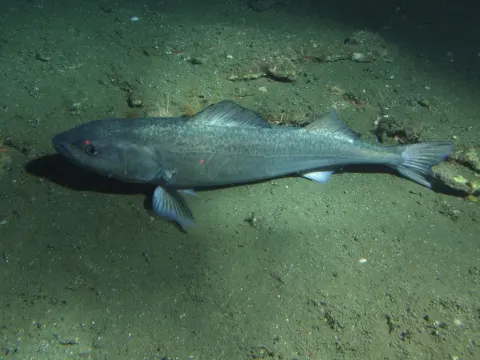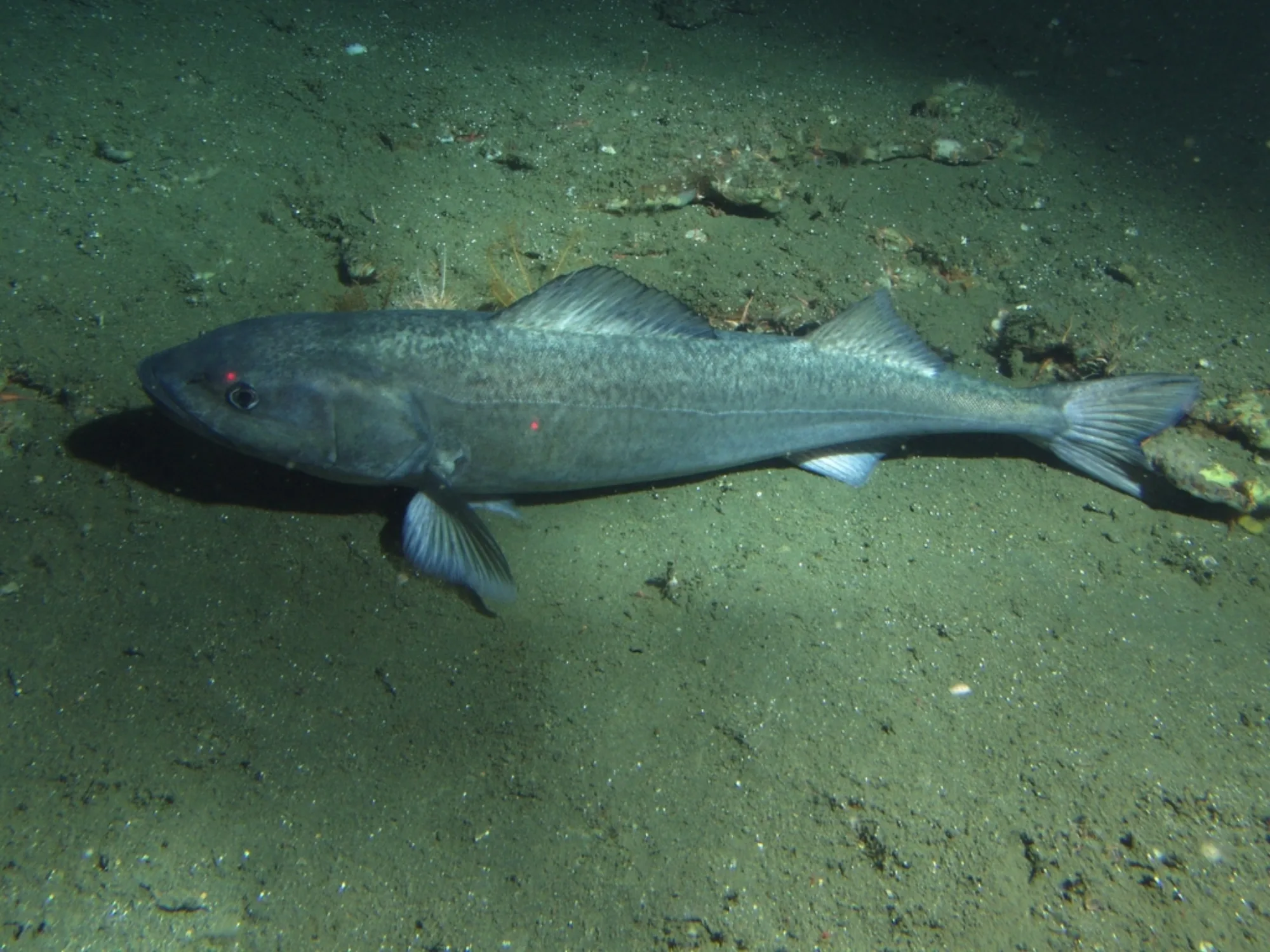
Black Cod
Anoplopoma fimbria
Known as sablefish as well as Black Cod, Anoplopoma fimbria is a deep-sea fish of the North Pacific Ocean. It lives over muddy seabeds, from 300 to 2,700 m below the surface. Typical adults average under 70 cm in length and 4 kg in weight, although fish in Alaska have reached 114 cm and 25 kg. The species can live a long time: the oldest recorded individual reached 94 years, though most fish in the commercial catch in many areas are less than 20 years old.
Adults take opportunities to feed on a range of other fish, including Alaskan pollock, capelin, herring and Pacific cod. Their diet also includes squid, euphausiids and jellyfish. Tagging studies show that sablefish can travel considerable distances: some had moved as much as 2,000 km by the time they were caught again. In one study, the estimated average distance travelled between release and recapture was 602 km, and the estimated yearly movement was 191 km. In Alaska's longline fisheries, killer whales and sperm whales take sablefish from hooks as the fishing gear is brought in.
Sablefish are caught commercially using bottom trawls, longlines and pots. In the Northeast Pacific, fisheries are managed separately in Alaska, in the Canadian province of British Columbia, and along the contiguous United States' west coast. Across these three areas, catches reached their highest levels in the 1970s and 80s; they have since fallen because populations declined and management restrictions were introduced.
Written from the English Wikipedia article Sablefish (CC BY-SA 4.0).
- Records
- 55,129
- Countries
- 2
- Atlas places
- 2
These are open occurrence records, so they show where people looked for and recorded the Black Cod as much as where it lives. Cells are up to 25 km across, and every location is generalised to its cell.
Generalised encounter areas, not exact locations. Each shape is a grid cell coloured by how likely the species is there.
- Very likelyCanada25 km zone · high confidence · 51084 records · updated 80 days ago
- Very likelyUnited States25 km zone · high confidence · 4045 records · updated 80 days ago
Conservation status not assessed here yet, so every location is generalised to its grid cell.