American Black Duck
Anas rubripes
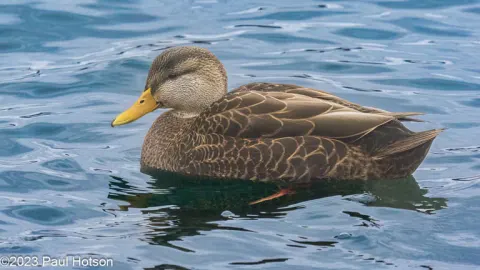
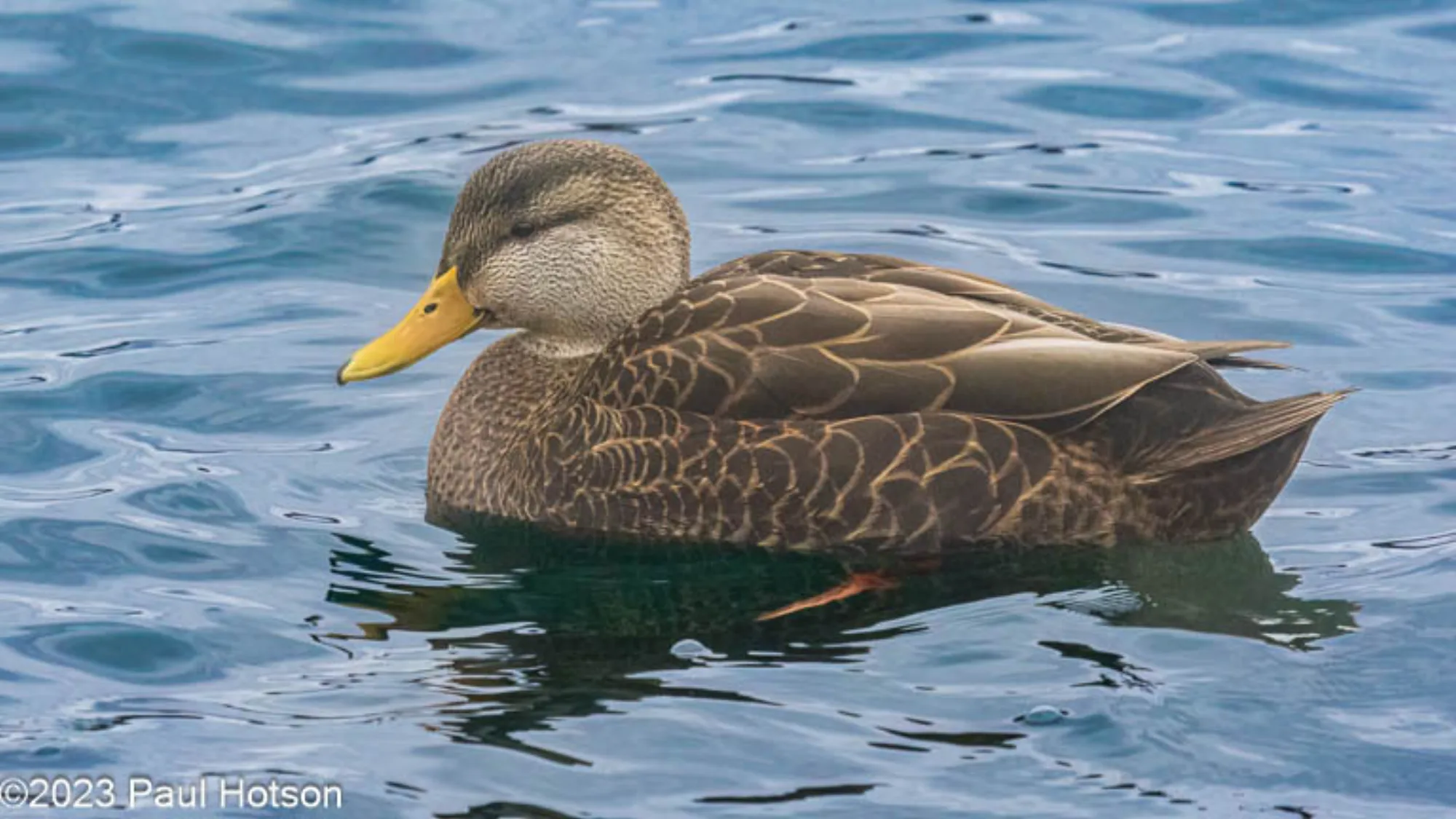
Dark brown plumage and a lighter brown head help distinguish the American Black Duck, a large dabbling duck of eastern North America. Its colouring resembles a female mallard's, but is darker. Males and females look much alike, although males have yellow bills and females have greenish bills marked with dark patches. In flight, white underwings contrast with the blackish body, while violet-blue feathers add colour to the wings. The female gives a loud series of quacks that drop in pitch.
Look for this duck in freshwater and coastal wetlands, including tidal marshes, estuaries and the edges of sheltered ponds and rivers. It also uses beaver ponds, shallow lakes, bogs and wooded swamps. Its Canadian range stretches from northeastern Saskatchewan to Newfoundland and Labrador, and it occurs in parts of the northern United States and along the Atlantic coast south to North Carolina. Some birds migrate, and many spend the colder months near the coast in the east-central United States. Others remain in the Great Lakes region throughout the year. It feeds in shallow water and grazes on land, eating wetland plants as well as snails, insects, mussels and small fish.
Nests are hidden on the ground, often on higher land, and contain six to 14 eggs. After hatching, the hen leads her brood to places rich in vegetation and small invertebrates; the young fledge after about six weeks. Population decline is linked to wetland drainage and filling, a warming climate and higher sea levels. Hunting, lead-shot poisoning and predators also affect the ducks.
Written from the English Wikipedia article American black duck (CC BY-SA 4.0).
- Records
- 1,635,305
- Countries
- 2
- Atlas places
- 2
These are open occurrence records, so they show where people looked for and recorded the American Black Duck as much as where it lives. Cells are up to 25 km across, and every location is generalised to its cell.
Generalised encounter areas, not exact locations. Each shape is a grid cell coloured by how likely the species is there.
- Very likelyUnited States25 km zone · high confidence · 1091434 records · updated 80 days ago
- Very likelyCanada25 km zone · high confidence · 543871 records · updated 80 days ago
Conservation status not assessed here yet, so every location is generalised to its grid cell.