Dibatag
Ammodorcas clarkei
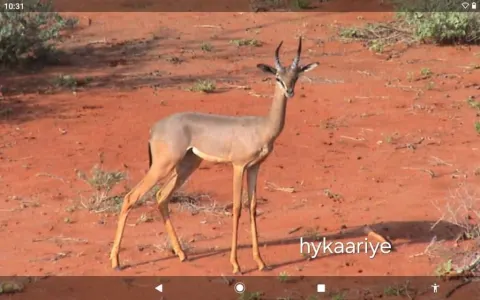
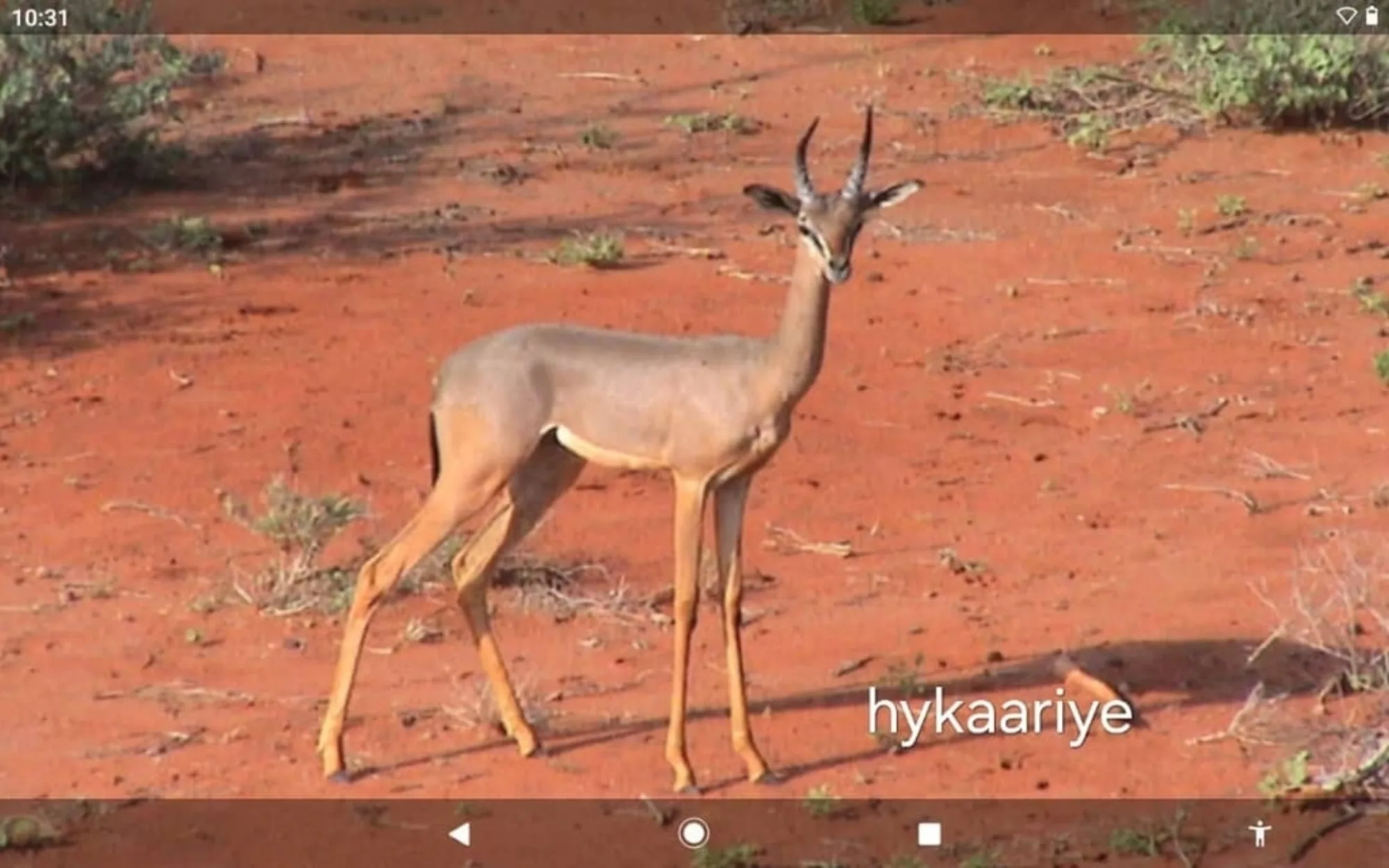
The Dibatag is a slender, medium-sized antelope found in the semi-arid bushlands of Ethiopia and Somalia. At first glance, it is easily confused with the gerenuk because of its long legs and neck, but it is distinguished by a dark tail that it holds upright when running. This behavior gives the animal its name, which translates from Somali as 'erect tail'. Males carry horns that curve forward, similar to a reedbuck, while females are smaller and hornless. Their smooth, gray to fawn coats provide excellent camouflage against the vegetation.
These alert and secretive animals are active during the day, living alone or in very small groups of up to six individuals. They are primarily browsers that feed on shoots, shrubs, and foliage from plants like Acacia. Because they can survive on very little water, they meet most of their needs from their food. Breeding is often timed with the wet season, and females give birth to a single offspring after a pregnancy lasting six to seven months. The young remain in hiding for the first week or two of life.
Populations have fallen significantly due to habitat degradation, drought, and hunting for their meat. Their range has been impacted by expanding human settlements and large numbers of livestock. In some regions, political instability and armed conflicts have prevented conservation efforts for decades. While they were once widespread, they have now disappeared from much of their historical territory, with only a few thousand individuals estimated to remain.
Written from the English Wikipedia article Dibatag (CC BY-SA 4.0).
- Atlas places
- 0
These are open occurrence records, so they show where people looked for and recorded the Dibatag as much as where it lives. Cells are up to 25 km across, and every location is generalised to its cell.
No encounter zones yet
Where and when you can expect to see Dibatag is calculated from observation density. No zones have been computed for this species yet.
Conservation status not assessed here yet, so every location is generalised to its grid cell.