Hairy-eared Dwarf Lemur
Allocebus trichotis
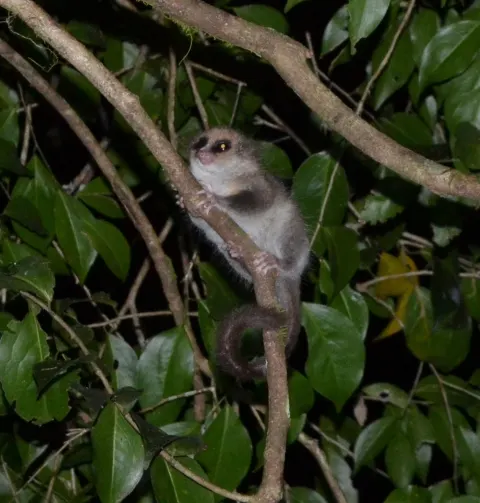
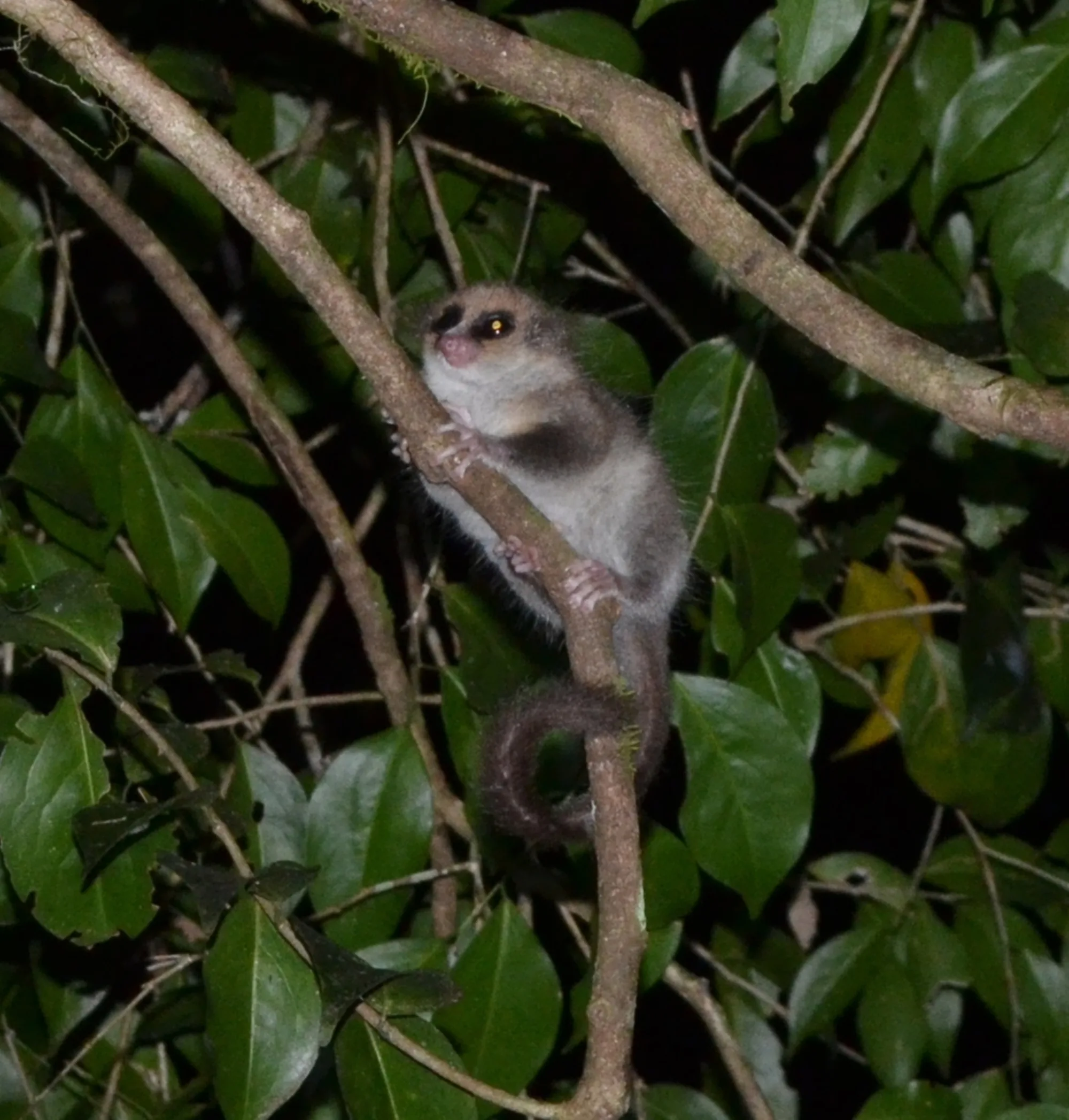
This nocturnal mammal is a rare sight in Madagascar, where it hides in the island's northern and eastern rainforests. Once feared extinct, the Hairy-eared Dwarf Lemur was rediscovered in 1989 within a remote lowland forest. While populations are fragmented, travelers may find them in primary highland forests near the popular tourist area of Andasibe. These lemurs weigh between 75 and 98 grams and are identified by their short, rounded ears topped with long, wavy tufts of sensory hair. They have light pink noses, dark rings around their eyes, and an exceptionally long tongue used for feeding.
Active from dusk until the first morning light, these lemurs spend their nights leaping through branches and their days sleeping in tree hollows. They often line these nests with straw or leaves and share the space with another of their kind for social grooming. While their wild diet is not fully known, they are thought to eat nectar and tree sap, along with insects and fruit. During the dry season from June to September, they become less active and are difficult to find. Breeding is believed to follow the wet season, with up to four juveniles sharing a single tree hole.
Survival for this species is precarious because its rainforest home is being destroyed by slash and burn agriculture and deforestation. The population is also declining due to hunting and trapping for human consumption. Natural predators like owls and Malagasy carnivores further impact their low numbers. Because their distribution is restricted and patchy, conservationists are working to expand protected parks into the highland forests to prevent the loss of these unique primates.
Written from the English Wikipedia article Hairy-eared dwarf lemur (CC BY-SA 4.0).
- Records
- 1
- Countries
- 1
- Atlas places
- 0
These are open occurrence records, so they show where people looked for and recorded the Hairy-eared Dwarf Lemur as much as where it lives. Cells are up to 25 km across, and every location is generalised to its cell.
Generalised encounter areas, not exact locations. Each shape is a grid cell coloured by how likely the species is there.
- Very likelyMadagascar50 km zone · medium confidence · 1 record · updated 4 days ago