Chinese Alligator
Alligator sinensis
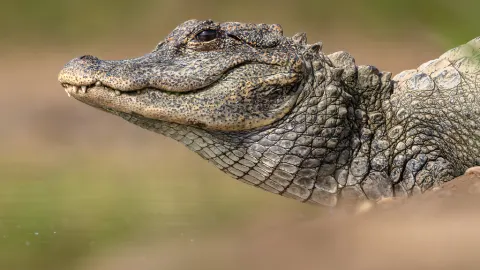
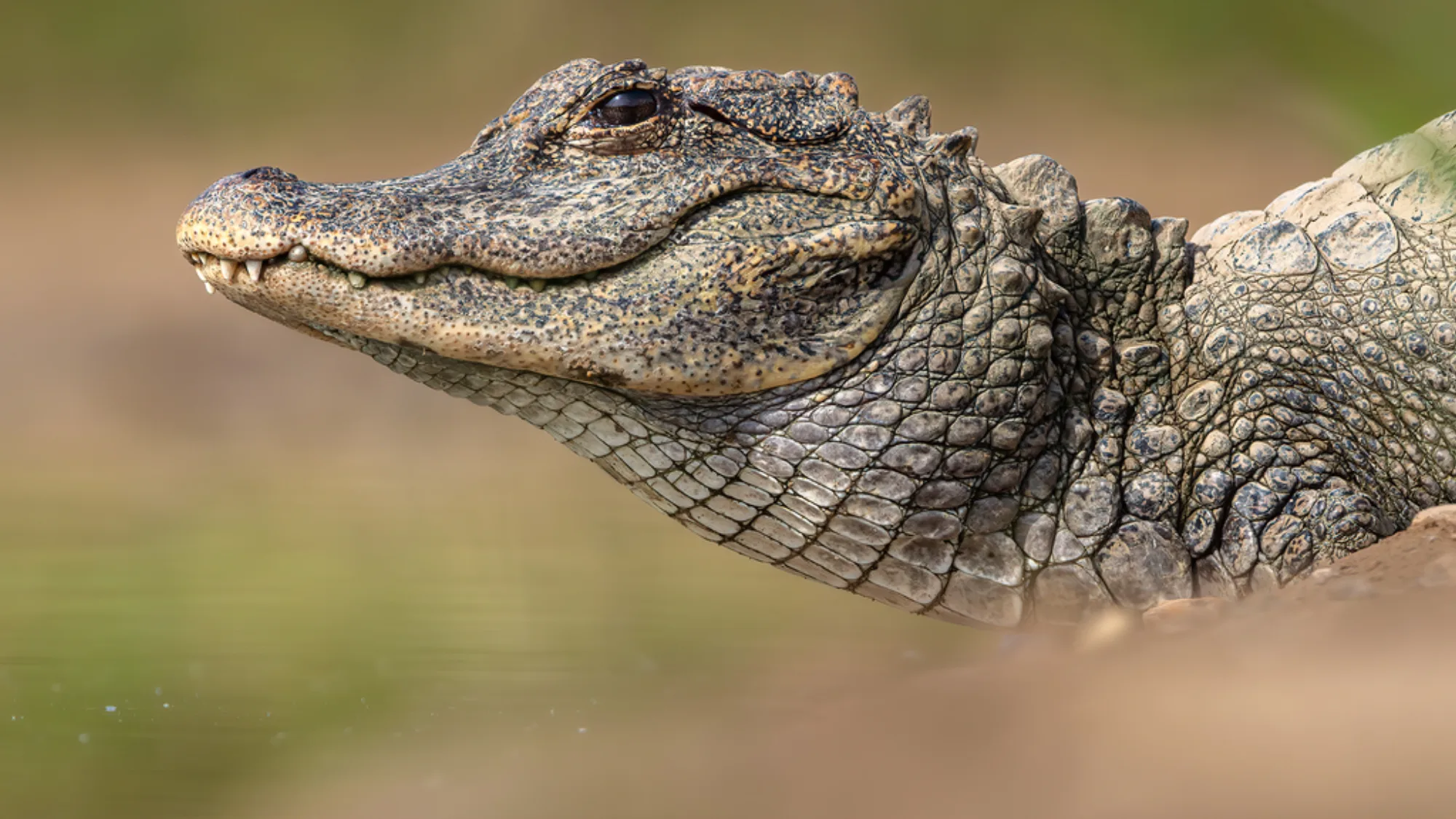
Dark grey or black, with a short, broad snout that turns slightly upwards, the Chinese Alligator is a small crocodilian found only in China. Adults measure 1.5 to 2.1 metres long and have armour across their bodies, including the belly. Its wild range is restricted to six regions of Anhui province, and it may also occur in Jiangsu and Zhejiang. It lives in fresh water, especially ponds and wetlands at the foot of mountains, among grasses and shrubs. Two breeding centres in or near its wild range also welcome visitors who want to see alligators.
In winter, the alligator lies dormant in burrows dug beside ponds and other small bodies of water. After winter it often basks, while in summer it feeds at night and shelters by day. Its varied diet consists mainly of fish and invertebrates, including snails, although it also takes small mammals and waterbirds when available. Adults bellow during the breeding season, and young call to their parents and to one another. Females build nests of rotting vegetation near water, often on islands with thick overhead cover and little human disturbance. They commonly lay 20 to 30 eggs, and mothers help the young hatch in September and carry them to the water.
Much of its wetland habitat has been lost to rice paddies and dams, while people have killed alligators out of fear, as perceived pests and for their meat. Habitat loss has also pushed them into colder, higher places where the soil is unsuitable for digging burrows. Poison used against rats and snails has harmed them, and the small wild population faces a risk from inbreeding.
Written from the English Wikipedia article Chinese alligator (CC BY-SA 4.0).
- Records
- 0
- Countries
- 1
No atlas park has a record of the Chinese Alligator in or around it yet.
These are open occurrence records, so they show where people looked for and recorded the Chinese Alligator as much as where it lives. Cells are up to 25 km across, and every location is generalised to its cell.
Generalised encounter areas, not exact locations. Each shape is a grid cell coloured by how likely the species is there.
- Very likelyChina25 km zone · low confidence · 0 records · updated 80 days ago
Conservation status not assessed here yet, so every location is generalised to its grid cell.