Aldabra Giant Tortoise
Aldabrachelys gigantea
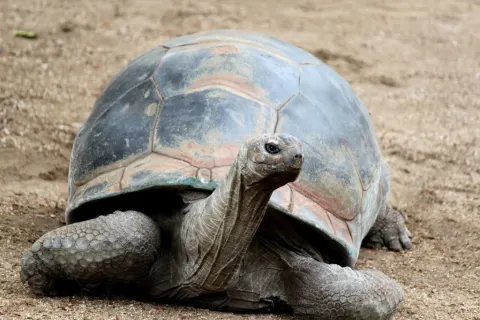
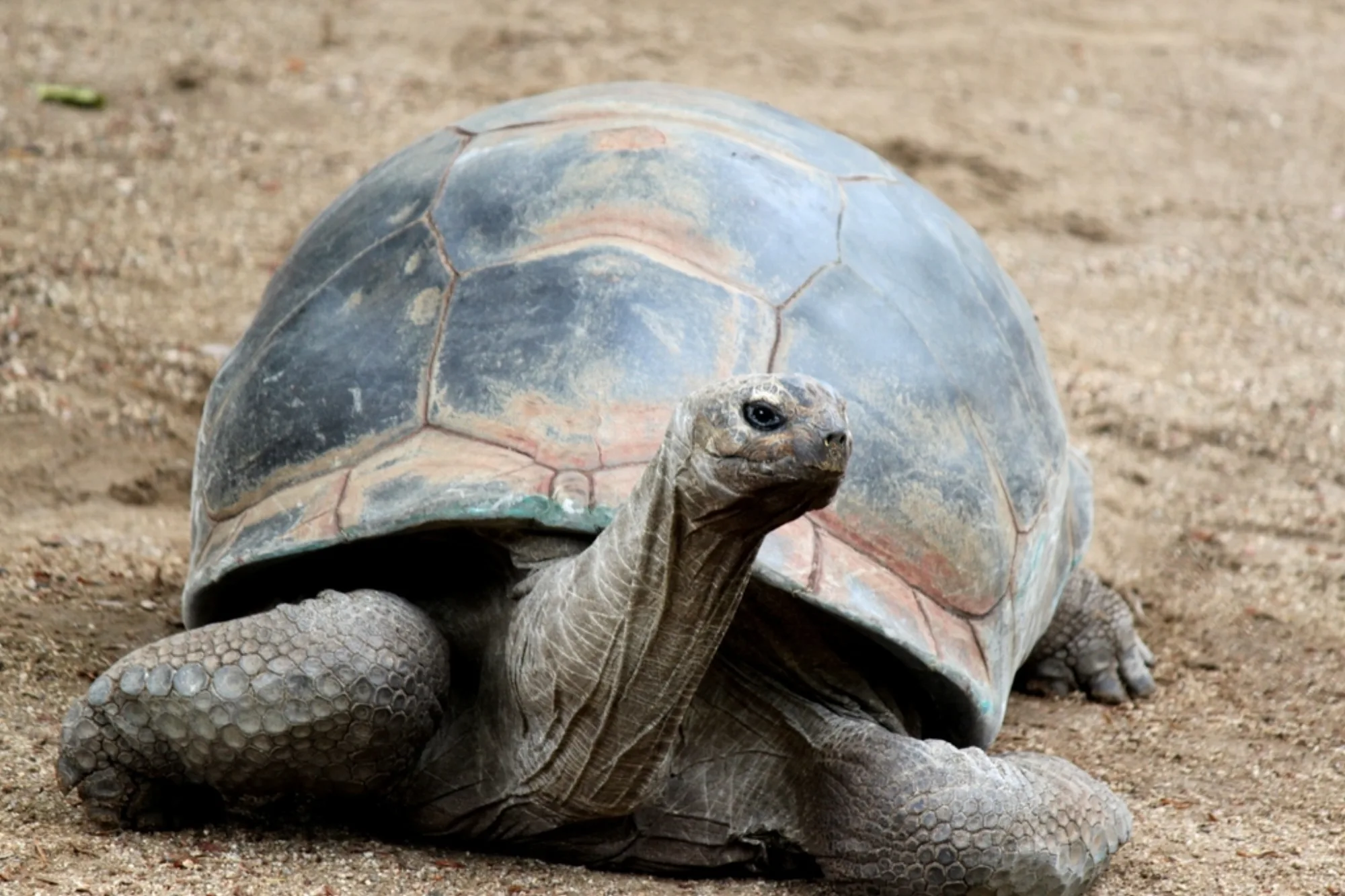
With its high, rounded shell and sturdy, heavily scaled legs, the Aldabra Giant Tortoise is one of the world's largest tortoises. Its shell is brown or tan, and its long neck helps it reach branches up to a metre above the ground. Males weigh 250 kg on average, while females are generally smaller, averaging 159 kg.
Native to the Seychelles, the species has its main population on Aldabra Atoll. Smaller populations live on Frégate Island and in Sainte Anne Marine National Park, while another lives on Changuu near Zanzibar. The tortoises use a range of habitats, from grasslands and low scrub to mangrove swamps and coastal dunes. Their grazing has helped shape an area of closely cropped grasses and herbs known as tortoise turf. They live alone or in herds, with groups tending to gather on open grassland. Mornings are their busiest time for grazing and browsing; in the heat of the day, they cool off in shade, wallows, caves or pools.
Grass, leaves, woody stems and fruit make up much of their diet, although they sometimes eat small invertebrates and carrion. With little fresh water available in their natural habitat, they get most of their moisture from food. Females lay 9 to 25 eggs in a nest, and the young hatch independently after about eight months of incubation. Historically, over-exploitation by European sailors was thought to have driven many Indian Ocean giant tortoise species to extinction, leaving the Aldabran giant tortoise as the exception by 1840.
Written from the English Wikipedia article Aldabra giant tortoise (CC BY-SA 4.0).
- Records
- 36
- Countries
- 3
- Atlas places
- 1
These are open occurrence records, so they show where people looked for and recorded the Aldabra Giant Tortoise as much as where it lives. Cells are up to 25 km across, and every location is generalised to its cell.
Generalised encounter areas, not exact locations. Each shape is a grid cell coloured by how likely the species is there.
- Very likelySeychelles25 km zone · medium confidence · 22 records · updated 80 days ago
- Very likelyTanzania25 km zone · medium confidence · 14 records · updated 80 days ago
- UncommonMauritius25 km zone · low confidence · 0 records · updated 80 days ago
Conservation status not assessed here yet, so every location is generalised to its grid cell.